Getting extra value on your early deposits is effortless once you know how to activate spin samurai free spins code to unlock immediate bonus balances and active slot credit in your profile.
Custom Machines: The Complete Guide to Custom Machine Design and Manufacturing - Hardai ARMND Engineering Solutions
- Home
- Custom Machines: The Complete Guide to Custom Machine Design and Manufacturing
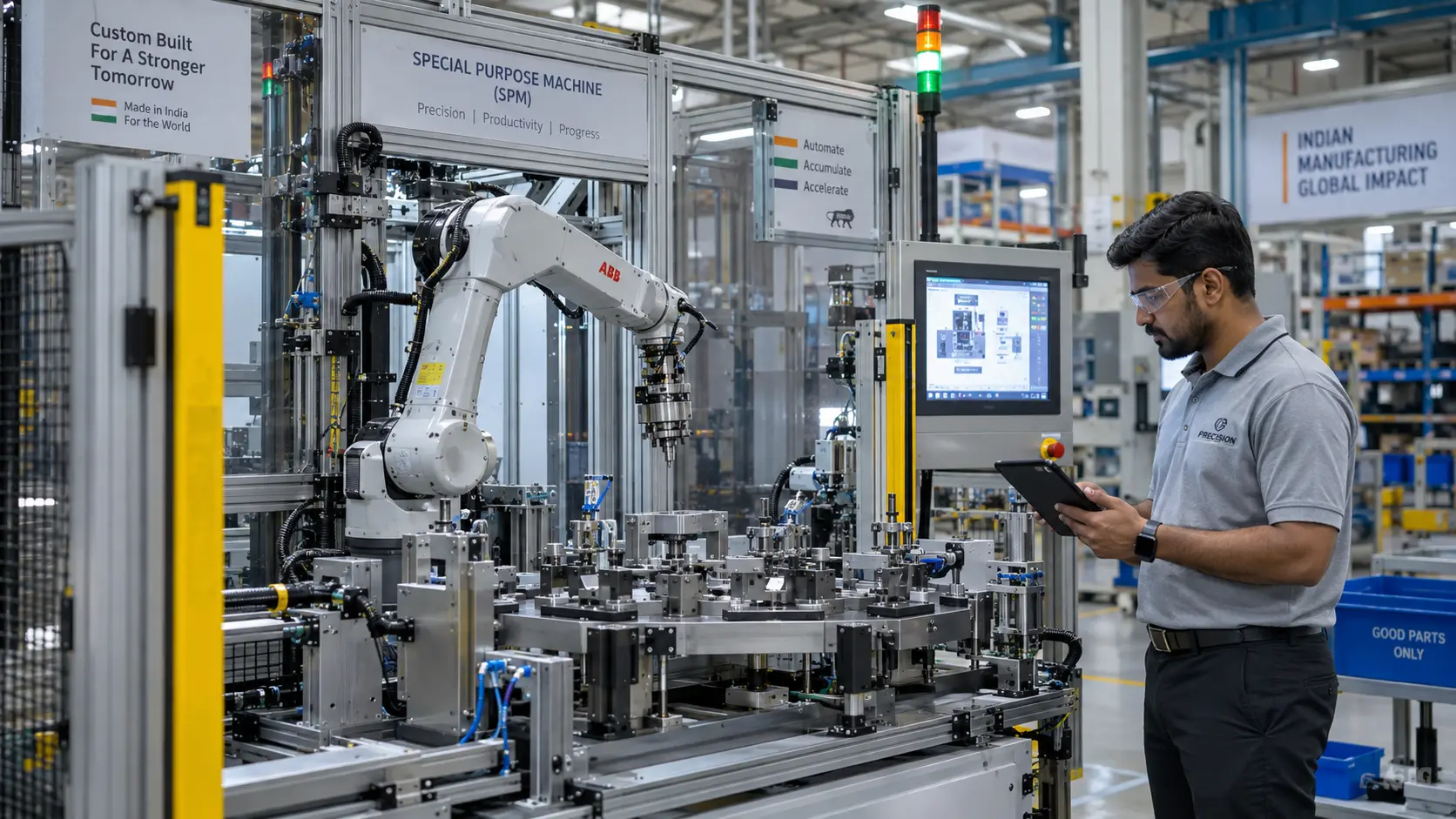
Custom Machine Design for Modern Manufacturing: From Concept to Production-Ready Automation
Modern manufacturing is becoming increasingly competitive. Manufacturers must deliver consistent product quality, maintain production efficiency, reduce operational bottlenecks, and respond quickly to changing customer requirements. However, many factories still depend on conventional machinery that may not be designed for their specific production challenges.
Standard machines can be highly effective for general-purpose applications, but they may not always accommodate unique product geometries, specialised assembly processes, unusual material-handling requirements, or complex automation workflows.
This is where custom machine design becomes an important engineering solution.
Custom machines enable manufacturers to develop equipment specifically suited to their processes, production volumes, product specifications, and operational objectives. From Special Purpose Machines (SPMs) and automated inspection systems to robotic workstations and customised assembly equipment, bespoke machinery can help businesses improve manufacturing capabilities.
In this guide, we explore the fundamentals of custom machines, the design and manufacturing process, important engineering considerations, industry applications, and how manufacturers can evaluate a custom machine design partner in India.
What Is Custom Machine Design?
Custom machine design is the engineering process of conceptualising, designing, developing, manufacturing, and integrating machinery specifically for a defined industrial application or production requirement.
Unlike standard equipment, which is generally designed for broad market applications, a custom machine is developed around the customer’s particular needs.
These needs may include:
- A unique manufacturing process.
- A specialised product geometry.
- A specific production cycle time.
- High repeatability and dimensional accuracy.
- Automated material handling.
- Integration with existing production equipment.
- Specialised testing or inspection requirements.
- Reduced manual intervention.
- Improved operator safety.
Custom machinery can range from a relatively simple fixture-assisted assembly station to a fully automated manufacturing system incorporating robotics, servo drives, industrial sensors, programmable logic controllers, and machine vision.
Custom Machines, SPMs, and Industrial Automation
Three terms are frequently used together in modern machinery development.
Custom machines: Equipment designed or modified for a specific customer application.
Special Purpose Machines (SPMs): Machines engineered to perform a defined manufacturing operation or a set of closely related operations. An SPM is a type of custom machine, although not every custom machine is necessarily an SPM.
Industrial automation systems: Systems that use mechanical equipment, control technology, sensors, robotics, and software to perform manufacturing tasks with reduced manual intervention.
These technologies can be combined to create integrated production solutions.
Practical Example
Consider an automotive component manufacturer that needs to assemble, press-fit, and inspect a particular component.
A standard press may perform the pressing operation, but the manufacturer might still require separate manual loading, component positioning, measurement, and quality inspection.
A custom machine could combine:
- Automatic component loading.
- Precision part positioning.
- Servo-controlled or pneumatic pressing.
- Force or displacement monitoring.
- Automated inspection.
- Part unloading and rejection.
- Production data recording.
The result is a machine designed around the complete production process rather than a single isolated operation.
Custom Machines vs Standard Machines: What Is the Difference?
Manufacturers often need to decide whether to purchase commercially available equipment or invest in a customized solution.
The right choice depends on the complexity of the application, production requirements, available budget, and expected operating conditions.
Parameter | Standard Machines | Custom Machines |
Primary purpose | General-purpose applications | Specific customer requirements |
Design | Pre-engineered | Application-specific |
Flexibility | Limited to available features | Can be designed around the process |
Functionality | Established operating functions | Tailored mechanical and automation functions |
Initial investment | Often lower for established applications | May be higher because of engineering and development |
Production integration | May require additional modifications | Can be designed for existing production lines |
Scalability | Depends on the manufacturer’s configuration | Can incorporate planned expansion options |
Development time | Generally available off the shelf | Requires design and development |
Maintenance | Often supported through standard procedures | Requires application-specific documentation and training |
Best suited for | Common, well-defined processes | Unique, specialised, or integrated processes |
When Is Customisation Justified?
Custom machine development may be worth investigating when:
- Existing machines cannot meet the required specifications.
- Manual processes create recurring bottlenecks.
- A product requires a specialised manufacturing sequence.
- Several separate operations can potentially be integrated.
- Consistent positioning or repeatability is difficult to achieve manually.
- A machine must interface with existing factory equipment.
- The production process requires specialised inspection or testing.
- The manufacturer intends to develop a differentiated production capability.
However, customisation is not automatically the best option. If a reliable standard machine meets the technical requirements at an acceptable total cost of ownership, it may be the more practical choice.
Why Do Manufacturers Need Custom Machines?
The demand for customised industrial machinery is closely connected to the increasing complexity of manufacturing operations.
1. Addressing Unique Production Requirements
Every manufacturing process has its own constraints.
A factory producing specialised components may require unusual tooling, a particular clamping arrangement, a customised transfer mechanism, or a process that is not supported by standard equipment.
Custom machine design allows engineers to develop solutions around these constraints.
For example, a manufacturer producing different sizes of metal components may require adjustable fixtures and interchangeable tooling to accommodate product variations.
2. Improving Production Productivity
Custom machines can combine multiple operations into a coordinated workflow.
Instead of manually transferring a component between several workstations, an integrated machine may perform multiple operations within one controlled sequence.
Potential productivity improvements may come from:
- Reduced material-transfer time.
- Shorter handling cycles.
- Fewer manual loading and unloading activities.
- Improved workstation coordination.
- Reduced waiting time between operations.
Actual productivity gains depend on the machine architecture, process design, operator interaction, and production conditions.
3. Improving Precision and Repeatability
Repeatability refers to the ability of a machine to perform the same operation consistently under similar conditions.
Custom machinery can incorporate:
- Precision locating fixtures.
- Dedicated tooling.
- Controlled actuation systems.
- Servo-based positioning.
- Measurement sensors.
- Automated inspection mechanisms.
For example, a customised drilling or assembly machine can be designed to position a component consistently before each operation.
However, the achievable accuracy depends on the machine structure, tooling, tolerances, thermal conditions, measurement systems, and manufacturing quality.
4. Reducing Manual Intervention
Repetitive manual operations can involve physical strain, inconsistent handling, and variable cycle times.
Custom automation solutions can assist with repetitive activities such as:
- Component loading.
- Pick-and-place operations.
- Assembly.
- Sorting.
- Packaging.
- Inspection.
- Material transfer.
The goal is not necessarily to eliminate every manual activity. Instead, automation should be designed to place people where human judgement, flexibility, and supervision provide the greatest value.
5. Improving Workplace Safety
A properly engineered machine can reduce exposure to certain hazards associated with repetitive or hazardous tasks.
Examples include:
- Automated handling of heavy components.
- Remote operation of hazardous processes.
- Guarded cutting and grinding operations.
- Interlocked access doors.
- Controlled machine movement.
- Automated material transfer.
Safety must be considered during the design process, not added after the machine has been manufactured.
A machine’s safety design should account for foreseeable hazards, applicable regulations, risk assessment, guarding, emergency stops, and control-system requirements.
6. Integrating Existing Production Lines
Factories frequently operate equipment from multiple manufacturers.
This can create challenges involving:
- Different communication protocols.
- Inconsistent machine cycle times.
- Varying component-handling methods.
- Limited production data.
- Incompatible control architectures.
A custom machine can be engineered to interface with existing equipment through suitable mechanical, electrical, and control-system integration.
Before development begins, engineers should assess available machine interfaces, signal requirements, floor space, utilities, and production constraints.
7. Reducing Operational Bottlenecks
A bottleneck is a process that limits the overall output of a manufacturing system.
For example, a factory may have sufficient machining capacity but experience delays during manual inspection or component transfer.
A custom inspection machine or automated material-handling system may help address this limitation.
However, manufacturers should first identify the actual source of the bottleneck rather than automate a process without understanding its effect on the wider production system.
Types of Custom Machines Used in Manufacturing
Custom machinery can be designed for a wide range of industrial applications.
1. Special Purpose Machines (SPMs)
SPMs are engineered for specific manufacturing operations.
Typical applications include:
- Drilling.
- Milling.
- Grinding.
- Assembly.
- Pressing.
- Component testing.
- Rotary processing.
- Specialised machining.
Example: A custom rotary machine designed to perform multiple machining or assembly operations on a specific component.
Hardai ARMND Engineering Solutions provides Special Purpose Machine design and manufacturing services, including mechanical design, prototyping, system integration, manufacturing, assembly, and testing support.
2. Custom Assembly Machines
Assembly machines are designed to combine individual parts into a finished product or subassembly.
Possible features include:
- Automated component feeding.
- Part orientation.
- Precision fixtures.
- Press-fit mechanisms.
- Screwdriving systems.
- Adhesive dispensing.
- Functional testing.
Example: An automated assembly workstation for fitting bearings, seals, and shafts into an industrial component.
3. Automated Inspection Machines
Automated inspection equipment helps assess product characteristics using sensors, measurement systems, or machine vision.
Applications include:
- Dimensional inspection.
- Presence or absence detection.
- Surface defect identification.
- Component orientation checks.
- Assembly verification.
- Functional testing.
Example: A vision-assisted inspection machine that checks whether a component has been assembled correctly before it reaches the next production stage.
Inspection systems should be selected according to the required measurement accuracy, lighting conditions, product characteristics, and acceptable defect-detection performance.
4. Robotic Automation Systems
Robotic systems combine industrial robots with customised tooling, fixtures, sensors, and control systems.
Typical applications include:
Robotic pick-and-place operations.
Machine tending.
Palletising.
Grinding and polishing.
Welding.
Material handling.
Assembly.
Example: A robotic polishing system using customised End-of-Arm Tooling (EOAT) to hold and manipulate a workpiece during surface finishing.
Hardai ARMND lists customised robotic gripper design and manufacturing among its industrial engineering services.
5. Custom Material-Handling Systems
Material-handling equipment transfers components or products between manufacturing stages.
Common solutions include:
- Conveyors.
- Transfer systems.
- Lifting mechanisms.
- Part feeders.
- Automated loading systems.
- Robotic handling equipment.
- Custom indexing systems.
Example: A conveyor-based transfer system that moves components from a machining station to an automated inspection station.
6. CNC-Based Customised Machinery
Computer Numerical Control (CNC) equipment uses programmed instructions to control machine movements.
Custom CNC-based machinery may be developed for:
- Specialised cutting.
- Precision drilling.
- Component machining.
- Custom milling.
- Dedicated production operations.
- Complex part geometries.
A customised CNC system may combine specialised fixtures, tooling, workholding, and automation to address a particular production requirement.
7. Custom Grinding and Polishing Machines
Grinding and polishing systems are used to modify surface characteristics, dimensions, or finish.
Custom solutions may be designed for:
Component-specific workholding.
Automated abrasive handling.
Robotic surface finishing.
Controlled contact pressure.
Specialised polishing sequences.
Dust and debris management.
Example: A robotic grinding workstation designed to maintain consistent tool contact with a component having a complex shape.
8. Packaging and Palletising Automation
Packaging and palletising systems can help automate the movement, arrangement, and handling of products.
Applications include:
- Container handling.
- Carton packing.
- Product sorting.
- Case packing.
- Palletising.
- Robotic product placement.
Example: A robotic palletising system designed to arrange paint containers or lubricant packaging according to a predefined pallet pattern.
9. Custom Testing and Quality-Control Machines
Testing machines are designed to evaluate product performance or verify specific technical characteristics.
Potential applications include:
- Leak testing.
- Pressure testing.
- Torque testing.
- Endurance testing.
- Rotational testing.
- Electrical testing.
- Load testing.
Example: A dedicated test rig for evaluating the operating performance of a rotating mechanical assembly under defined test conditions.
Industries That Benefit from Custom Machinery
Custom machines can support a wide range of manufacturing industries.
Automotive Manufacturing
Automotive production requires repeatable processes, controlled assembly, and consistent component quality.
Custom machinery may be used for:
- Component assembly.
- Press-fit operations.
- Engine-component handling.
- Automated inspection.
- Robotic machine tending.
- Specialised testing.
Engineering and Metalworking
Metalworking operations often involve unique components, complex geometries, and demanding production requirements.
Custom machinery can assist with:
- Drilling.
- Grinding.
- Milling.
- Deburring.
- Part handling.
- Inspection.
- Dedicated machining operations.
FMCG Manufacturing
Fast-moving consumer goods manufacturing often involves high-volume production and repetitive packaging processes.
Custom automation can support:
- Product sorting.
- Filling operations.
- Packaging.
- Conveying.
- Labelling.
- Quality inspection.
Packaging Industries
Packaging manufacturers may require customised machinery for different container sizes, materials, and packaging configurations.
Potential solutions include:
- Container handling systems.
- Packing machines.
- Carton-forming equipment.
- Robotic palletising.
- Packaging inspection systems.
Electrical and Electronics Manufacturing
Electronics production requires careful handling and controlled assembly conditions.
Custom machines may be designed for:
- Component placement.
- Assembly.
- Testing.
- Connector insertion.
- Inspection.
- Product handling.
Pharmaceutical Manufacturing
Pharmaceutical machinery must be designed around stringent process, hygiene, traceability, and validation requirements where applicable.
Potential applications include:
- Packaging.
- Inspection.
- Material handling.
- Specialised testing.
- Controlled dispensing processes.
The machine design must reflect the applicable regulatory, contamination-control, and validation requirements of the particular application.
Food Processing
Food-processing equipment may require specialised handling, cleaning, hygiene, and product-contact materials.
Custom machinery can assist with:
- Sorting.
- Portioning.
- Packaging.
- Conveying.
- Inspection.
- Product handling.
Industrial Equipment Manufacturing
Manufacturers of pumps, compressors, rotating equipment, and other industrial products may benefit from customised assembly and testing equipment.
Applications include:
- Shaft assembly.
- Bearing installation.
- Performance testing.
- Component alignment.
- Leak testing.
- Specialised material handling.
Custom Machine Design and Manufacturing Process
A successful custom machine project requires a structured engineering workflow.
The following process provides a practical framework for developing customised industrial machinery.
Step 1: Understand Customer Requirements
The first stage is to identify the actual production problem.
Important questions include:
- What operation must the machine perform?
- What products will it handle?
- What is the required production volume?
- What is the target cycle time?
- What level of precision is required?
- What are the available utilities?
- What are the operator responsibilities?
- How will the machine connect to existing equipment?
A detailed User Requirement Specification (URS) can help document the intended performance and operating conditions.
Step 2: Conduct Production Feasibility Analysis
Before detailed design begins, engineers should evaluate whether the proposed machine is technically and commercially practical.
This may include:
- Process feasibility.
- Component handling studies.
- Cycle-time estimation.
- Tooling evaluation.
- Preliminary automation assessment.
- Risk identification.
- Budgetary evaluation.
A feasibility study can help identify potential problems before significant engineering expenditure is committed.
Step 3: Develop the Machine Concept and Architecture
At this stage, engineers establish the overall machine configuration.
The concept may define:
- Machine layout.
- Workstations.
- Component flow.
- Actuation methods.
- Tooling arrangements.
- Robot placement.
- Control-system architecture.
- Operator access.
- Maintenance zones.
Different concepts may be compared before selecting a suitable design direction.
Step 4: Perform 3D CAD Modelling and Mechanical Design
Three-dimensional Computer-Aided Design (CAD) modelling allows engineers to develop the machine virtually before manufacturing.
The design process may include:
- Machine-frame modelling.
- Assembly modelling.
- Fixture design.
- Mechanism development.
- Component placement.
- Interference checking.
- Access and maintenance evaluation.
Hardai ARMND identifies 3D CAD modelling and mechanical design as part of its engineering and SPM-related capabilities.
Step 5: Complete Engineering Calculations and Component Selection
Mechanical and electrical components should be selected according to the expected operating conditions.
Relevant calculations may include:
- Load and stress analysis.
- Shaft sizing.
- Bearing selection.
- Torque requirements.
- Power transmission.
- Structural deflection.
- Actuator sizing.
- Fastener selection.
- Thermal considerations.
Where appropriate, simulation and engineering analysis can help evaluate structural performance and identify potential design weaknesses.
Step 6: Integrate Automation, Sensors, and Control Systems
Automation integration transforms the mechanical concept into a coordinated operating system.
Possible components include:
- Programmable Logic Controllers (PLCs).
- Human-Machine Interfaces (HMIs).
- Servo motors.
- Variable-frequency drives.
- Pneumatic actuators.
- Industrial sensors.
- Safety controllers.
- Machine vision.
- Industrial communication networks.
The control system should be designed around the machine sequence, operating conditions, fault handling, and safety requirements.
Step 7: Develop and Test Prototypes
Prototyping helps engineers evaluate design assumptions before full-scale manufacturing.
Prototypes may be used to assess:
- Component fit.
- Tool accessibility.
- Mechanical movement.
- Product handling.
- Fixture performance.
- Assembly sequence.
- Operator interaction.
Hardai ARMND also identifies 3D printing and prototyping as part of its engineering services, which can support the evaluation of selected machine components and design concepts.
Step 8: Manufacture and Assemble the Machine
Once the design has been approved, the required components can be manufactured or sourced.
Activities may include:
- Fabrication.
- CNC machining.
- Component procurement.
- Electrical-panel assembly.
- Mechanical assembly.
- Pneumatic installation.
- Cable routing.
- Software configuration.
Manufacturing quality should be monitored against approved drawings and technical specifications.
Step 9: Conduct Factory Acceptance Testing
Factory Acceptance Testing (FAT) is performed before the machine is delivered or installed at the customer’s facility.
Typical FAT activities include:
- Functional testing.
- Safety-system checks.
- Sequence verification.
- Cycle-time evaluation.
- Product trials.
- Fault-condition testing.
- Documentation review.
The FAT protocol should be agreed upon in advance, including acceptance criteria and responsibilities.
Step 10: Install, Commission, and Train Operators
At the customer’s facility, the machine must be installed and integrated into the intended production environment.
Commissioning may involve:
- Mechanical alignment.
- Electrical connections.
- Utility connections.
- Software configuration.
- Integration with existing equipment.
- Production trials.
- Operator training.
- Maintenance training.
Step 11: Validate Performance and Provide Support
After commissioning, the machine’s performance should be assessed against the agreed specifications.
Relevant measures may include:
- Production cycle time.
- Product quality.
- Machine availability.
- Repeatability.
- Safety performance.
- Fault frequency.
- Maintenance requirements.
Post-delivery support should include appropriate technical documentation, troubleshooting guidance, and maintenance recommendations.
Key Engineering Considerations in Custom Machine Design
A successful custom machine is not simply a collection of mechanical components. It is an integrated system that must perform reliably under defined operating conditions.
1. Machine Cycle Time and Throughput
Cycle time is the time required to complete one defined machine operation or production cycle.
For a machine producing one finished part per cycle:
Theoretical Throughput=Available Production TimeCycle Time\text{Theoretical Throughput} = \frac{\text{Available Production Time}}{\text{Cycle Time}}
Actual output will depend on downtime, changeovers, rejects, loading delays, and other operational factors.
Engineers should evaluate the complete machine sequence rather than focusing only on the movement speed of an individual actuator.
2. Overall Equipment Effectiveness
Overall Equipment Effectiveness (OEE) is a commonly used framework for evaluating manufacturing equipment performance.
It is generally expressed as:
OEE=Availability×Performance×Quality\text{OEE} = \text{Availability} \times \text{Performance} \times \text{Quality}
OEE analysis can help identify whether production losses are caused by downtime, reduced operating speed, or defective output.
Custom machinery should be designed with these potential losses in mind.
3. Structural Strength and Rigidity
Machine frames and structural components must withstand operational loads without excessive deformation or vibration.
Important considerations include:
- Static loading.
- Dynamic loading.
- Vibration.
- Resonance.
- Mounting conditions.
- Thermal expansion.
- Structural deflection.
A machine intended for precision machining may require a more rigid structure than a simple material-transfer system.
4. Tolerances and Precision
Not every component requires the same level of precision.
Engineers should distinguish between:
- Part tolerance.
- Machine positioning accuracy.
- Repeatability.
- Fixture accuracy.
- Measurement uncertainty.
Over-specifying precision can increase the cost and complexity of a machine without providing practical value.
5. Pneumatic and Hydraulic Systems
Pneumatic systems are commonly used for relatively simple linear movements, clamping, and actuation.
Hydraulic systems may be appropriate where higher force density or specialised load-handling capabilities are required.
Selection should consider:
- Force.
- Speed.
- Duty cycle.
- Pressure.
- Leakage control.
- Maintenance.
- Energy consumption.
- Safety requirements.
6. Servo Motors and Motion Control
Servo systems are useful for applications requiring controlled position, speed, torque, or coordinated movement.
Potential applications include:
- Precision indexing.
- Automated assembly.
- Synchronised mechanisms.
- Variable-speed positioning.
- Robotic motion.
- Controlled machining operations.
Servo selection should be based on the actual motion profile, load inertia, acceleration, duty cycle, and required control performance.
7. PLC and HMI Systems
A Programmable Logic Controller manages machine sequences, inputs, outputs, and control logic.
A Human-Machine Interface allows operators to interact with the machine.
A well-designed control system should provide:
- Clear operating modes.
- Fault messages.
- Appropriate access controls.
- Process status information.
- Maintenance indicators.
- Diagnostic information.
8. Industrial Sensors
Sensors allow the machine to detect physical conditions.
Examples include:
- Proximity sensors.
- Photoelectric sensors.
- Pressure sensors.
- Temperature sensors.
- Position sensors.
- Force sensors.
- Encoders.
- Vision systems.
Sensors should be selected according to the required accuracy, environment, response time, and reliability.
9. Safety Interlocks and Guarding
Machine safety must be incorporated into the design from the beginning.
Safety measures may include:
- Fixed guards.
- Interlocked access doors.
- Emergency-stop systems.
- Safety-rated monitoring.
- Safe operating procedures.
- Restricted access to hazardous movement.
- Risk-based protective measures.
Safety design should comply with the applicable legal and technical requirements for the machine’s location and application.
10. Ergonomics
A machine should be designed for practical human interaction.
Ergonomic considerations include:
- Operator reach.
- Loading height.
- Visibility.
- Manual handling requirements.
- Control-panel accessibility.
- Maintenance access.
- Repetitive movements.
Poor ergonomics can reduce the practical benefits of automation.
11. Preventive Maintenance
Maintenance requirements should be considered during machine development.
The design should provide reasonable access to:
- Bearings.
- Lubrication points.
- Filters.
- Sensors.
- Wear components.
- Electrical panels.
- Pneumatic components.
Standardised components and clear documentation can simplify maintenance and spare-parts management.
12. Energy Efficiency
Energy efficiency should be evaluated across the entire machine.
Possible approaches include:
- Selecting appropriately sized motors.
- Reducing unnecessary idle operation.
- Managing compressed-air consumption.
- Using efficient drive systems.
- Optimising machine sequences.
- Minimising unnecessary mechanical resistance.
13. Scalability and Industry 4.0 Integration
Manufacturers may eventually need higher production capacity or additional product variants.
Where appropriate, custom machines can be designed with:
- Modular tooling.
- Expandable control systems.
- Additional sensor provisions.
- Flexible fixtures.
- Production data interfaces.
- Remote monitoring capabilities.
Industry 4.0 integration should be driven by a clear operational requirement rather than technology adoption alone.
Benefits of Investing in Custom Machine Design
Custom machinery can provide several potential operational benefits when properly engineered and implemented.
Improved Production Efficiency
Integrating multiple operations and reducing unnecessary handling may help improve workflow efficiency.
Consistent Product Quality
Dedicated tooling, controlled processes, and automated inspection can support consistent manufacturing outcomes.
Reduced Manual Handling
Automation can reduce repetitive handling activities and improve the allocation of human resources.
Better Process Control
Sensors and control systems can provide greater visibility into machine operation and process conditions.
Improved Workplace Safety
Appropriately designed automation can reduce exposure to selected mechanical or ergonomic hazards.
Increased Production Flexibility
Modular fixtures, adjustable tooling, and programmable controls may support selected product variations.
Long-Term Operational Value
A well-designed machine can provide value over its service life through maintainability, reliability, and suitability for the intended process.
However, custom machinery does not guarantee cost savings or a particular return on investment. Its value should be assessed using the actual project cost, production requirements, expected operational improvements, maintenance needs, and machine lifespan.
Challenges in Custom Machine Development
Custom machine projects can deliver significant engineering value, but they also involve challenges.
Higher Initial Engineering Costs
Design, simulation, prototyping, and application-specific development require technical resources.
Management approach: Establish a clear scope and evaluate the cost of multiple design concepts before detailed development.
Longer Development Timelines
Custom machines require design, procurement, manufacturing, testing, and commissioning.
Management approach: Use a defined project schedule with engineering milestones and procurement checkpoints.
Design Complexity
Mechanical, electrical, software, and safety systems must work together.
Management approach: Use multidisciplinary design reviews and maintain controlled technical documentation.
Component Availability
Specialised components may have long procurement lead times.
Management approach: Identify critical components early and evaluate technically suitable alternatives.
Integration Challenges
Existing factory systems may have limited compatibility.
Management approach: Audit interfaces, utilities, communication protocols, and physical constraints before finalising the design.
Maintenance Requirements
Custom equipment may require application-specific maintenance knowledge.
Management approach: Provide maintenance manuals, spare-parts lists, training, and troubleshooting procedures.
Need for Skilled Technical Support
Complex machinery requires competent engineering and service support.
Management approach: Select a partner that can provide assistance throughout design, installation, testing, and post-delivery operation.
How to Choose the Right Custom Machine Design Partner in India
Selecting a machinery development partner is an important decision for manufacturers.
Before appointing an engineering company, consider the following factors:
Evaluation Factor | What to Examine |
Technical expertise | Understanding of mechanical systems and manufacturing processes |
Mechanical design | CAD modelling, machine architecture, and component design |
Automation integration | Experience with PLCs, sensors, drives, and industrial automation |
Simulation capabilities | Relevant structural, modal, or fluid analysis capabilities |
Manufacturing infrastructure | Ability to fabricate, machine, assemble, and test components |
Prototyping | Capacity to evaluate design concepts before production |
Testing procedures | Defined FAT, commissioning, and performance-verification processes |
Industry experience | Familiarity with the requirements of your manufacturing sector |
Documentation | Drawings, manuals, electrical diagrams, and maintenance information |
Project execution | Clear milestones, responsibilities, and communication processes |
After-sales support | Availability of technical assistance and maintenance support |
Questions to Ask a Potential Engineering Partner
Before signing a project agreement, ask:
- Have you developed machines for applications similar to mine?
- Can you provide a clear engineering and manufacturing workflow?
- What information do you need to prepare a technical proposal?
- How will you calculate and validate machine cycle time?
- What testing procedures will be followed?
- How will safety requirements be addressed?
- What documentation will be supplied?
- How will design changes be managed?
- What support will be available after installation?
- Which parts of the project will be handled internally, and which will be outsourced?
A transparent technical discussion can help manufacturers make more informed purchasing decisions.
Why Consider Hardai ARMND Engineering Solutions?
Hardai ARMND Engineering Solutions is an engineering solutions company based in Rajasthan, India, with services covering Special Purpose Machines, industrial engineering, customised robotic grippers, 3D printing, prototyping, and related engineering development activities.
According to its official website, the company provides engineering services involving:
Custom Machine and SPM Development
Hardai ARMND offers Special Purpose Machine design and manufacturing services for specialised industrial applications.
Its published SPM capabilities include:
- Machine design.
- Engineering calculations.
- 3D CAD modelling.
- Structural analysis.
- Modal analysis.
- Fluid analysis.
- Machine prototyping.
- System integration.
- Precision assembly.
- Manufacturing and testing.
Industrial Automation and Robotic Solutions
The company also provides customized robotic gripper and automation-related services.
These include applications involving:
- Custom robotic grippers.
- Pick-and-place operations.
- Robotic polishing.
- Manufacturing automation.
- Specialised automation tools.
3D Printing and Prototyping
Hardai ARMND identifies plastic and metal 3D printing as part of its engineering service portfolio.
These capabilities may support prototyping and the development of selected custom machine components.
An Engineering-Led Development Approach
The company’s published workflow covers:
- Request for quotation.
- Planning and proposal development.
- Design and development.
- Production and execution.
- Testing and delivery.
- Post-delivery support.
Manufacturers considering Hardai ARMND should discuss their specific application requirements, technical specifications, project scope, budget, and delivery expectations directly with the company.
Important: The suitability of an engineering partner should be assessed against the requirements of the particular project, including its technical capabilities, manufacturing arrangements, testing procedures, and support commitments.
Custom Machines and the Future of Industrial Automation
The future of manufacturing is increasingly focused on flexible production, better data utilisation, and more connected industrial systems.
Custom machines can support these developments when the technology is appropriately matched to the production requirement.
Smart Manufacturing
Connected machines can provide production data to support operational monitoring and process improvement.
AI-Assisted Inspection
Artificial intelligence and machine vision may be used in selected inspection applications to identify defects or classify products.
These systems require suitable training data, lighting, validation, and ongoing performance monitoring.
Robotics and Collaborative Automation
Robotic systems can support repetitive, hazardous, or physically demanding operations.
Collaborative robot applications require careful assessment of the robot, tooling, task, operating environment, and applicable safety requirements.
Modular Machine Architecture
Modular designs can make it easier to adapt tooling, fixtures, sensors, or machine stations when production requirements change.
IoT-Enabled Machinery
Industrial Internet of Things technologies can support equipment monitoring, data collection, and integration with wider manufacturing systems.
Data-Driven Manufacturing
Machine data can help manufacturers investigate downtime, identify recurring faults, monitor production performance, and support maintenance planning.
The most valuable custom automation projects are not necessarily the most technologically complex. They are the ones that address a clearly defined manufacturing need through a practical and maintainable engineering solution.
Conclusion: Select the Lubrication Technology, Not the Marketing Claim
The goal of lubrication engineering is not to select the most sophisticated lubricant.
It is to select the right lubrication technology for the actual operating conditions.
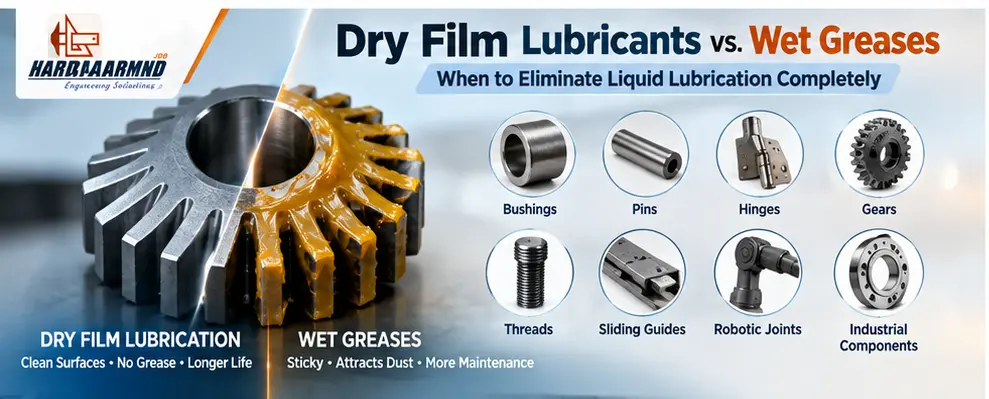
Dry-film lubrication can be an excellent solution for selected applications involving difficult access, high loads at low speed, oscillating motion, contamination sensitivity, vacuum or challenging thermal environments.
MoS₂ is particularly important because its layered structure provides useful solid-lubrication behavior and has a long history of use in demanding applications. But its performance is strongly dependent on environment, temperature, coating architecture and operating conditions.
Grease and oil remain indispensable technologies.
High-speed bearings, circulating lubrication systems, applications requiring heat removal, and components where sealing and lubricant retention are important may be better served by conventional wet lubrication.
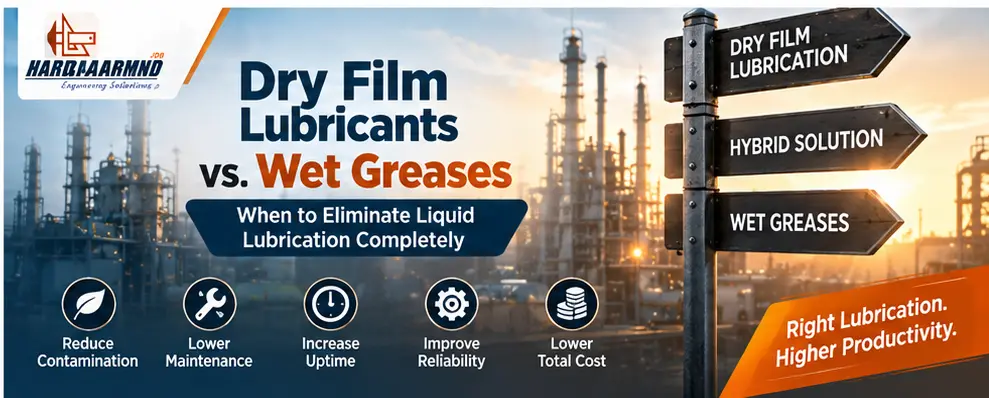
The most useful way to think about dry film lubricants vs wet greases is therefore:
Do not ask which lubricant is universally better. Ask which lubrication mechanism best matches the contact.
For some components, the answer will be dry film.
For others, it will be grease.
And for many sophisticated machines, the optimum answer will be both.
The real opportunity for manufacturers is to stop treating lubrication as a routine maintenance consumable and start treating it as an engineering design variable.
When load, speed, temperature, environment, material pair, maintenance access and total cost of ownership are evaluated together, it becomes possible to determine whether wet lubrication should be retained, reduced, supplemented—or eliminated completely.
Frequently Asked Questions
1. What is the difference between dry film lubricant and grease?
A dry film lubricant forms a solid lubricating layer on a component’s surface, while grease is a semi-solid lubricant containing base oil, thickener and additives. Dry films are particularly useful for selected boundary-lubrication applications, while grease remains highly effective for many bearings and mechanical systems.
2. Can dry film lubricant replace grease completely?
Yes, in selected applications. Complete replacement requires suitable load, speed, temperature, environment, substrate and coating life. It should be validated through appropriate testing rather than assumed.
3. Is MoS₂ better than grease?
Neither is universally better. MoS₂ can provide valuable solid lubrication under appropriate conditions, particularly in certain boundary, vacuum and specialized applications. Grease can be superior where lubricant retention, sealing, fluid-film lubrication or cooling is important.
4. When should dry film lubrication be used?
Dry film lubrication should be considered where conventional oil or grease creates problems such as difficult relubrication, contamination, migration, unsuitable environmental conditions or excessive maintenance requirements.
5. What industries use dry film lubricants?
Dry-film lubricants are used in selected aerospace, automotive, industrial machinery, precision engineering and specialized mechanical applications. SAE maintains requirements for solid-film lubricants used in aerospace applications.
6. Are dry film lubricants suitable for high temperatures?
Some dry-film systems can operate at temperatures where conventional lubricants become unsuitable, but performance is formulation- and environment-dependent. MoS₂, for example, can be affected by oxidation and environmental conditions at elevated temperatures.
7. Can dry film lubrication be used on bearings?
It can be used in selected specialized bearing applications, but it should not be assumed to replace conventional bearing lubrication. High-speed rolling bearings frequently depend on properly designed oil or grease lubrication, and circulating oil may also provide cooling.
8. How long does a dry film lubricant coating last?
There is no universal service-life figure. Wear life depends on coating formulation, thickness, substrate, contact pressure, speed, temperature, environment, motion and duty cycle. Application-specific endurance testing is the most reliable way to establish service life.
9. Does dry film lubrication eliminate maintenance?
No. It can reduce relubrication requirements in suitable applications, but components still require inspection and maintenance. Coating condition, substrate wear and overall machine condition must be monitored.
10. What factors determine whether grease can be eliminated?
The most important factors include load, speed, motion type, temperature, environment, contact geometry, substrate, required service life, cooling requirements, sealing requirements, maintenance access and total cost of ownership.
Recent Posts
- Custom Machines: The Complete Guide to Custom Machine Design and Manufacturing
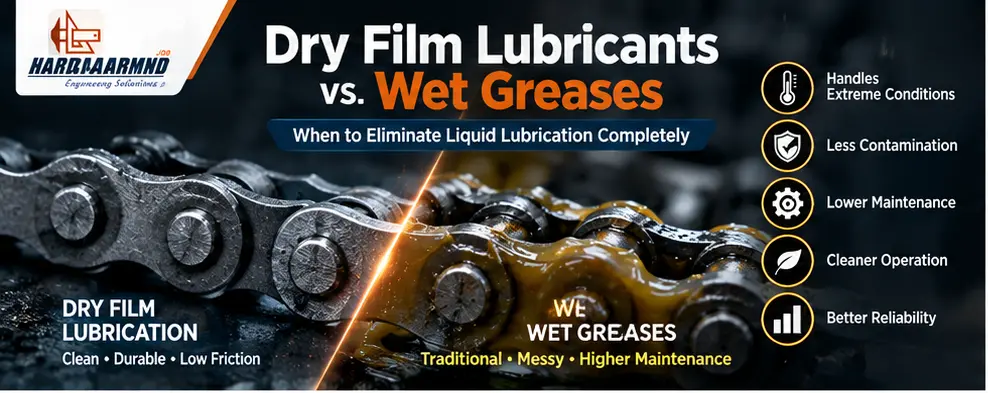
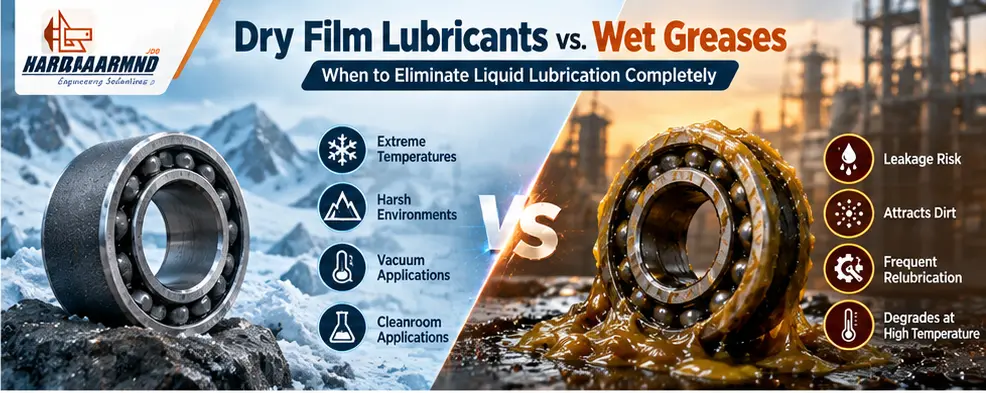
- Dry Film Lubricants vs. Wet Greases: When to Eliminate Liquid Lubrication Completely
- Types of Automation Systems in Manufacturing A Complete Guide for Indian Manufacturers
- Future-Proofing Your Manufacturing Supply Chain with Automation: What Indian Manufacturers Should Do Now
- Mastering 3D Printing: Plastic vs. Metal Parts for Custom Manufacturing
Products
-
 MolyKul MoS2 Gear Oil additive for cars and bike| Anti-friction MoS2 Solution - 100ml
₹598.73Original price was: ₹598.73.₹399.62Current price is: ₹399.62. Including 18% GST -
MolyKul Aero-Spec 500 (MKG AS500 NG2) – MoS2 Anti-Seize Aerospace grease – 500 Deg C
₹2,088.60 – ₹9,739.72Price range: ₹2,088.60 through ₹9,739.72 Including 18% GST
-
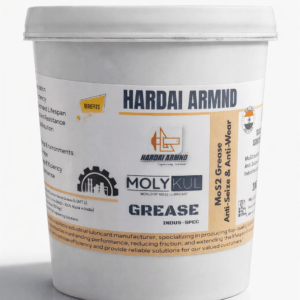
MolyKul MoS2 Grease for industrial application| Lithium + Anti-Seize MoS2 - 650 Deg C
₹1,539.90Original price was: ₹1,539.90.₹1,169.38Current price is: ₹1,169.38. Including 18% GST -
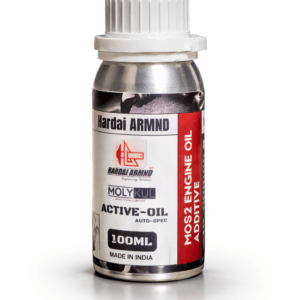
MolyKul MoS2 engine oil additive for cars and bikes| Anti-friction MoS2 Solution - 100ml
₹195.88 – ₹531.00Price range: ₹195.88 through ₹531.00 Including 18% GST
-
MolyKul MoS2 Grease for industrial application| Lithium + Anti-Seize MoS2 - 320 Deg C
₹684.40 – ₹6,608.00Price range: ₹684.40 through ₹6,608.00 Including 18% GST
For More Contact Us

Thousands of Australian gamblers play lucky dream games every day for the exciting themes and generous payout percentages.
Reputação medida em avaliações, não em anúncio — melhores casas de apostas chinesas A distribuição por estrelas mostra se as críticas são pontuais ou constantes. Veja como a empresa responde às reclamações.
Очень рекомендуем посмотреть примеры: pinco ставки Кликните, чтобы узнать больше
Recommended — https://tower.bet/monero for classic casino games
Leave A Comment