MolyKul MoS2 Bearings: Advanced Industrial Lubrication
- Home
- MolyKul MoS2 Bearings: Enhancing Bearing Performance with Advanced Solid Lubrication Technology
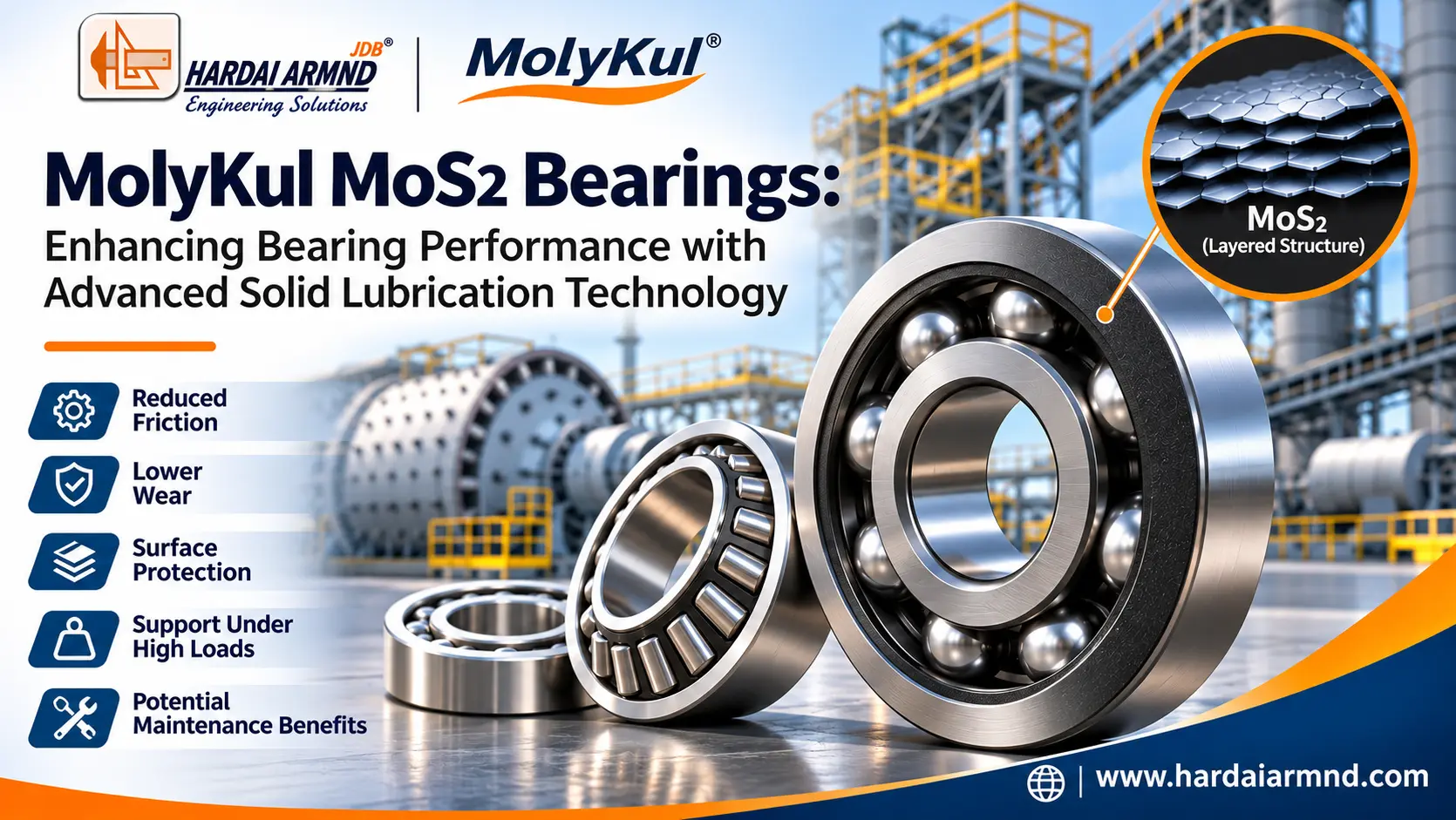
Industrial bearings play a critical role in maintaining the performance, efficiency, and reliability of modern machinery. From heavy engineering equipment and mining machinery to automotive systems and industrial automation, bearings support rotating components, manage mechanical loads, and help minimize friction between moving surfaces.
However, continuous operation under heavy loads, high temperatures, vibration, dust, and challenging environmental conditions can create significant lubrication challenges. Conventional lubrication methods may not always provide sufficient protection, particularly in applications involving boundary lubrication, frequent start-stop cycles, or difficult-to-access components.
This is where Molybdenum Disulfide (MoS₂) offers an advanced approach to friction and wear management.
MolyKul MoS2 Bearings by Hardai ARMND Engineering Solutions focus on the application of MoS₂-based solid lubrication technology to help improve bearing surface protection and support reliable industrial operation. Depending on the bearing design and application requirements, MoS₂ can be incorporated through specialized surface coatings or MoS₂-containing lubricants.
Understanding these technologies can help engineers, maintenance professionals, and industrial buyers select appropriate lubrication solutions for demanding machinery.
In this guide, we explore how MoS₂ works, its potential benefits for industrial bearings, its applications, and the important factors to consider when selecting an appropriate MolyKul bearing lubrication solution.
Why Bearing Lubrication Matters in Modern Industries
Bearings are essential mechanical components designed to support shafts, reduce rotational resistance, and maintain accurate movement between machine components.
They are commonly used in:
- Industrial motors and pumps.
- Mining and stone crusher machinery.
- Automotive and transmission systems.
- Steel and cement manufacturing equipment.
- CNC machines and automation systems.
- Heavy engineering and material-handling equipment.
Although bearings are designed for continuous mechanical operation, their performance depends heavily on proper lubrication.
Common bearing lubrication problems
Several operating conditions can negatively affect bearing performance:
- Excessive friction: Insufficient lubrication can increase friction between contacting surfaces, resulting in additional heat generation and mechanical losses.
- Surface wear: Repeated contact under load can gradually damage bearing surfaces, especially when the lubricant film becomes inadequate.
- Overheating: Friction, excessive preload, contamination, and incorrect lubrication can contribute to elevated operating temperatures.
- Lubrication failure: Conventional lubricants may become ineffective because of leakage, contamination, oxidation, lubricant starvation, or unsuitable operating conditions.
- Premature bearing damage: Inadequate lubrication can accelerate surface fatigue, scuffing, and other forms of bearing damage.
For industrial facilities, these problems can result in unplanned maintenance, equipment downtime, and increased operating costs.
Advanced lubrication technologies such as MoS₂ can provide additional surface protection under suitable operating conditions.
What Are MolyKul MoS2 Bearings?
MolyKul MoS2 Bearings refer to bearing lubrication solutions associated with Molybdenum Disulfide (MoS₂), a solid lubricant widely used in industrial friction and wear management.
MoS₂ is an inorganic compound consisting of molybdenum and sulfur. Its crystal structure contains layers that can slide over one another relatively easily, giving it useful lubricating properties.
How does MoS₂ help lubricate bearings?
When appropriately formulated or applied to a compatible surface, MoS₂ can create a low-shear interface between contacting surfaces.
This helps:
- Reduce friction under suitable lubrication conditions.
- Minimize direct metal-to-metal contact.
- Protect surfaces against adhesive wear.
- Improve performance in boundary lubrication conditions.
- Provide lubrication where conventional fluid films may be insufficient.
Unlike conventional liquid lubricants, MoS₂ works as a solid lubricant. Its effectiveness depends on surface preparation, application method, operating conditions, and the formulation used.
MoS₂-coated bearings vs MoS₂-lubricated bearings
It is important to understand that these are different technologies.
Feature | MoS₂-coated bearings | MoS₂-containing lubricated bearings |
Application | Solid film applied to selected surfaces | MoS₂ incorporated into grease or lubricant |
Lubrication mechanism | Surface-based lubricating film | Lubricant delivers MoS₂ to contact areas |
Main purpose | Reduce surface friction and wear | Support lubrication and surface protection |
Suitable applications | Selected sliding and contact surfaces | Compatible rolling and sliding bearing systems |
Maintenance | Depends on coating durability and design | Depends on lubricant condition and relubrication requirements |
A MoS₂ coating is not equivalent to MoS₂ grease. The correct approach depends on the bearing’s geometry, contact conditions, speed, load, and operating environment.
How Does MoS2 Technology Work in Bearings?
The lubrication mechanism of MoS₂ is based on its unique layered crystal structure.
Each MoS₂ layer consists of a plane of molybdenum atoms positioned between two planes of sulfur atoms. These layers are held together by relatively weak van der Waals forces.
This structure allows adjacent layers to slide over one another with relatively low resistance.
1. Formation of a low-friction lubricating layer
During operation, MoS₂ particles or an applied coating can establish a lubricating interface between contacting surfaces.
In a coated bearing, the solid film is already applied to selected surfaces before operation.
In a grease-lubricated bearing, MoS₂ particles are dispersed in the grease formulation and can contribute to lubrication at suitable contact areas.
2. Reduction of metal-to-metal contact
Bearing surfaces contain microscopic irregularities known as asperities. Under heavy loads or insufficient lubrication, these irregularities can come into direct contact.
MoS₂ helps reduce friction at these contact points by providing a low-shear interface.
This can reduce adhesive interactions between metal surfaces and help control wear.
3. Protection under boundary lubrication conditions
Boundary lubrication occurs when the lubricant film is too thin to completely separate contacting surfaces.
This condition can occur during:
- Machine start-up and shutdown.
- Low-speed and high-load operation.
- Frequent stop-and-start cycles.
- Changes in operating loads.
- Temporary lubricant starvation.
MoS₂ can provide additional protection in suitable boundary-lubrication applications.
4. Transfer-film formation
During sliding contact, MoS₂ can transfer onto opposing surfaces and contribute to the formation of a lubricating film.
This transfer-film mechanism is particularly relevant to solid-film lubrication and selected sliding or mixed-contact applications.
However, the behaviour of the film depends on surface preparation, coating composition, humidity, temperature, contact pressure, and operating speed.
Key Benefits of MolyKul MoS2 Bearings
The use of appropriately selected MoS₂-based lubrication technology can offer several advantages for industrial bearing systems.
1. Reduced friction
One of the primary advantages of MoS₂ is its low-shear behaviour.
By reducing friction at suitable contact interfaces, MoS₂ can help minimize friction-related mechanical losses and support smoother component movement.
2. Improved wear resistance
Repeated surface contact can gradually damage bearing components.
MoS₂-based lubrication can help reduce adhesive wear and surface damage by providing a protective lubricating interface.
This is particularly useful in applications involving boundary lubrication or intermittent sliding contact.
3. Better support under heavy loads
Industrial bearings frequently experience substantial mechanical loads.
Under suitable conditions, MoS₂ can help maintain lubrication at highly stressed contact areas where conventional lubricant films may become insufficient.
However, bearing load capacity is determined by the complete bearing design, materials, geometry, and lubrication system—not by the coating alone.
4. Protection during start-up
Machine start-up can create temporary lubrication challenges, especially after equipment has remained idle.
A properly applied solid lubricant coating can provide a lubricating layer on selected surfaces before normal operating lubrication conditions are established.
This can be beneficial for certain start-stop applications.
5. Potential maintenance benefits
Lubrication problems are a common contributor to bearing failures.
Depending on the selected solution, MoS₂ technology may help reduce friction-related wear and support longer maintenance intervals.
Actual maintenance requirements must still be determined by bearing specifications, operating conditions, lubricant compatibility, and manufacturer recommendations.
6. Additional protection in difficult lubrication environments
Some machine components are difficult to lubricate continuously because of their location, operating environment, or design.
Dry film lubrication may be appropriate where conventional liquid lubrication is unsuitable.
MoS₂ coatings can be particularly useful in selected applications involving limited lubricant access, vacuum environments, or specialized mechanical assemblies.
It is important to remember that MoS₂ performance can be affected by moisture and oxidation. Therefore, environmental compatibility must be evaluated before selecting a coating.
MolyKul MoS2 Bearings vs Conventional Bearings
Conventional bearings generally rely on grease, oil, or other lubrication arrangements to maintain an appropriate lubricating film between moving surfaces.
MoS₂-based solutions introduce an additional solid lubrication mechanism.
The following table explains the differences.
Comparison factor | Conventional bearing lubrication | MoS₂-based bearing solution |
Lubrication mechanism | Oil or grease film | Solid film or MoS₂-containing lubricant |
Friction management | Depends on lubricant film | Low-shear solid lubrication mechanism |
Wear protection | Depends on lubricant formulation and film condition | Additional protection under suitable contact conditions |
Heavy-load suitability | Depends on bearing and lubricant specifications | Can support boundary lubrication applications |
Start-up protection | Depends on lubricant retention and condition | Coating can provide a pre-existing surface film |
Maintenance | Relubrication as specified | Depends on coating type or grease formulation |
Application | General industrial machinery | Selected demanding or specialized applications |
Which solution should industrial buyers choose?
There is no universal answer.
Conventional grease or oil lubrication remains essential for many rolling-element bearings, particularly where an appropriate elastohydrodynamic lubricant film can be maintained.
MoS₂ may provide additional benefits in applications where boundary lubrication, surface wear, or specialized operating conditions are important considerations.
In some systems, a compatible MoS₂ coating can complement conventional lubrication. In others, an appropriately formulated MoS₂ grease may be the better choice.
The objective should always be to select the lubrication system according to actual operating requirements rather than assuming that one technology can replace every other lubrication method.
Industrial Applications of MoS2 Bearings
MoS₂-based bearing lubrication has potential applications across several industrial sectors.
The appropriate implementation may involve dry film coating, MoS₂-containing grease, or another application-specific formulation.
1. Heavy engineering machinery
Heavy engineering equipment operates under continuous mechanical stress.
Bearings in gearboxes, rotating assemblies, material-handling equipment, and specialized machinery can experience significant friction and wear.
MoS₂-based lubrication may help protect suitable contact surfaces and support reliable operation.
2. Automotive and automobile components
Automotive systems use bearings in wheel assemblies, transmissions, electric motors, turbocharger-related assemblies, and other rotating mechanisms.
MoS₂ coatings may be considered for selected bearing surfaces where the coating and assembly are compatible.
MoS₂-containing grease may also be used in suitable automotive bearing and chassis applications.
3. Mining and stone crusher machinery
Mining and stone-crushing equipment frequently operates in dusty environments under high mechanical loads and vibration.
Bearings in conveyor systems, crushers, motors, and supporting machinery require reliable lubrication.
Appropriately selected MoS₂-containing grease may help support boundary lubrication and wear protection in compatible low-speed or heavily loaded applications.
Dry film coatings can also be evaluated for selected mechanical components where their operating conditions justify their use.
4. Steel and metal processing plants
Steel manufacturing equipment involves demanding operating conditions, including mechanical loads, heat, and continuous production cycles.
MoS₂ coatings may be considered for selected sliding interfaces, bearing components, guides, and other friction-sensitive assemblies.
The coating must be selected according to the temperature, contact conditions, and environmental exposure.
5. Cement manufacturing equipment
Cement plants use crushers, conveyors, rotary equipment, mills, and heavy-duty motors.
Bearing lubrication in these environments can be challenging because of dust, vibration, and high mechanical loads.
MoS₂-containing industrial grease may be suitable for certain applications when its formulation matches the bearing manufacturer’s requirements.
6. Industrial automation systems
Automated production systems use precision bearings, linear guides, robotic assemblies, and motion-control components.
MoS₂ dry film coatings may be considered for selected sliding or contact surfaces where low friction and reduced dependence on conventional liquid lubrication are desirable.
Coating thickness and dimensional tolerances are especially important in precision assemblies.
7. Aerospace and specialized mechanical assemblies
Aerospace and specialized engineering systems can require lubrication under unusual environmental conditions.
MoS₂ solid films have established uses in selected specialized applications, particularly where conventional lubricants are unsuitable.
However, qualification, humidity exposure, temperature limits, material compatibility, and application-specific testing are essential before using any coating in safety-critical assemblies.
8. Heavy-duty rotating equipment
Industrial motors, pumps, compressors, and other rotating equipment depend on correctly selected bearings and lubrication arrangements.
MoS₂ technology may complement conventional lubrication or serve as a specialized dry lubrication treatment for suitable components.
The selection should consider operating speed, bearing type, lubricant compatibility, and thermal conditions.
7. Why Choose MolyKul MoS2 Bearing Solutions?
MolyKul is the solid lubrication technology brand developed by Hardai ARMND Engineering Solutions.
The brand focuses on MoS₂-based lubrication products and engineering applications, including dry film coatings, grease additives, and oil additives.
Its approach is based on applying solid lubrication technology to practical industrial friction and wear challenges.
1. Specialized MoS₂ coating technology
MolyKul Mono-Coat is a MoS₂-based dry film lubrication solution developed for selected engineering components.
It is designed to provide a low-friction interface on compatible surfaces.
Hardai ARMND’s published coating information describes applications involving bearings, rotating components, pumps, and other mechanical assemblies.
Explore: MolyKul Mono-Coat and MoS₂ Lubrication Coating.
2. Application-specific lubrication solutions
Different bearings have different lubrication requirements.
A high-speed motor bearing, a low-speed heavy-load bearing, and a specialized sliding assembly cannot necessarily use the same lubrication approach.
Hardai ARMND focuses on evaluating the application before selecting an appropriate MoS₂-based solution.
3. Multiple lubrication technologies
MolyKul offers different approaches to solid lubrication:
- MolyKul MoS₂ Coating: Dry film lubrication for selected component surfaces.
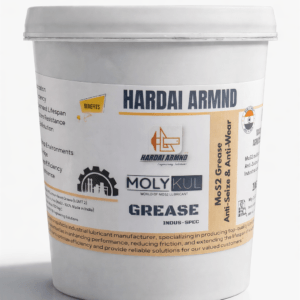
- MolyKul MoS₂ Grease: Grease-based lubrication incorporating MoS₂.
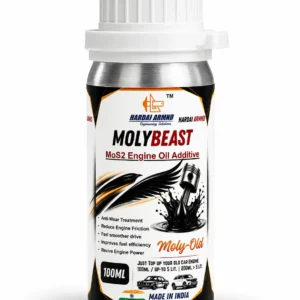
- MolyKul MoS₂ Oil Additive: MoS₂-based additive for compatible oil applications.
These products serve different lubrication requirements and should not be treated as interchangeable.
4. Engineering-focused development
Hardai ARMND combines lubrication technology with engineering knowledge to address industrial component requirements.
This can help businesses evaluate surface treatment, coating suitability, lubrication selection, and component performance considerations.
5. Customized industrial requirements
Industrial components may have specific requirements related to material, geometry, operating speed, load, temperature, and surface finish.
An application-specific evaluation can help determine whether a MoS₂ coating, MoS₂ grease, or another lubrication method is appropriate.
For more information, visit Hardai ARMND Engineering Solutions.
Recent Posts
- MolyKul MoS2 Bearings: Enhancing Bearing Performance with Advanced Solid Lubrication Technology
- Gantry Robots vs. 6-Axis Articulated Arms: Which Fits Your Factory Floor?
- Why Dual-Gripper EOAT is the Secret to Cutting CNC Machine Tending Cycle Times by 50%
- Designing Modular SPMs for High-Mix, Low-Volume (HMLV) Manufacturing: The Scalable Automation Playbook
- Custom Automation Robotic Grippers: Improving Precision and Manufacturing Efficiency
Products
-
 MolyKul MoS2 Gear Oil additive for cars and bike| Anti-friction MoS2 Solution - 100ml
₹598.73Original price was: ₹598.73.₹399.62Current price is: ₹399.62. Including 18% GST -
MolyKul Aero-Spec 500 (MKG AS500 NG2) – MoS2 Anti-Seize Aerospace grease – 500 Deg C
₹2,088.60 – ₹9,739.72Price range: ₹2,088.60 through ₹9,739.72 Including 18% GST
-
MolyKul MoS2 Grease for industrial application| Lithium + Anti-Seize MoS2 - 650 Deg C
₹1,539.90Original price was: ₹1,539.90.₹1,169.38Current price is: ₹1,169.38. Including 18% GST -
MolyKul MoS2 engine oil additive for cars and bikes| Anti-friction MoS2 Solution - 100ml
₹195.88 – ₹531.00Price range: ₹195.88 through ₹531.00 Including 18% GST
-
MolyKul MoS2 Grease for industrial application| Lithium + Anti-Seize MoS2 - 320 Deg C
₹684.40 – ₹6,608.00Price range: ₹684.40 through ₹6,608.00 Including 18% GST

Leave A Comment