Factory Automation: Signs Your Factory Needs Automation
- Home
- 5 Signs Your Factory Needs Automation Immediately
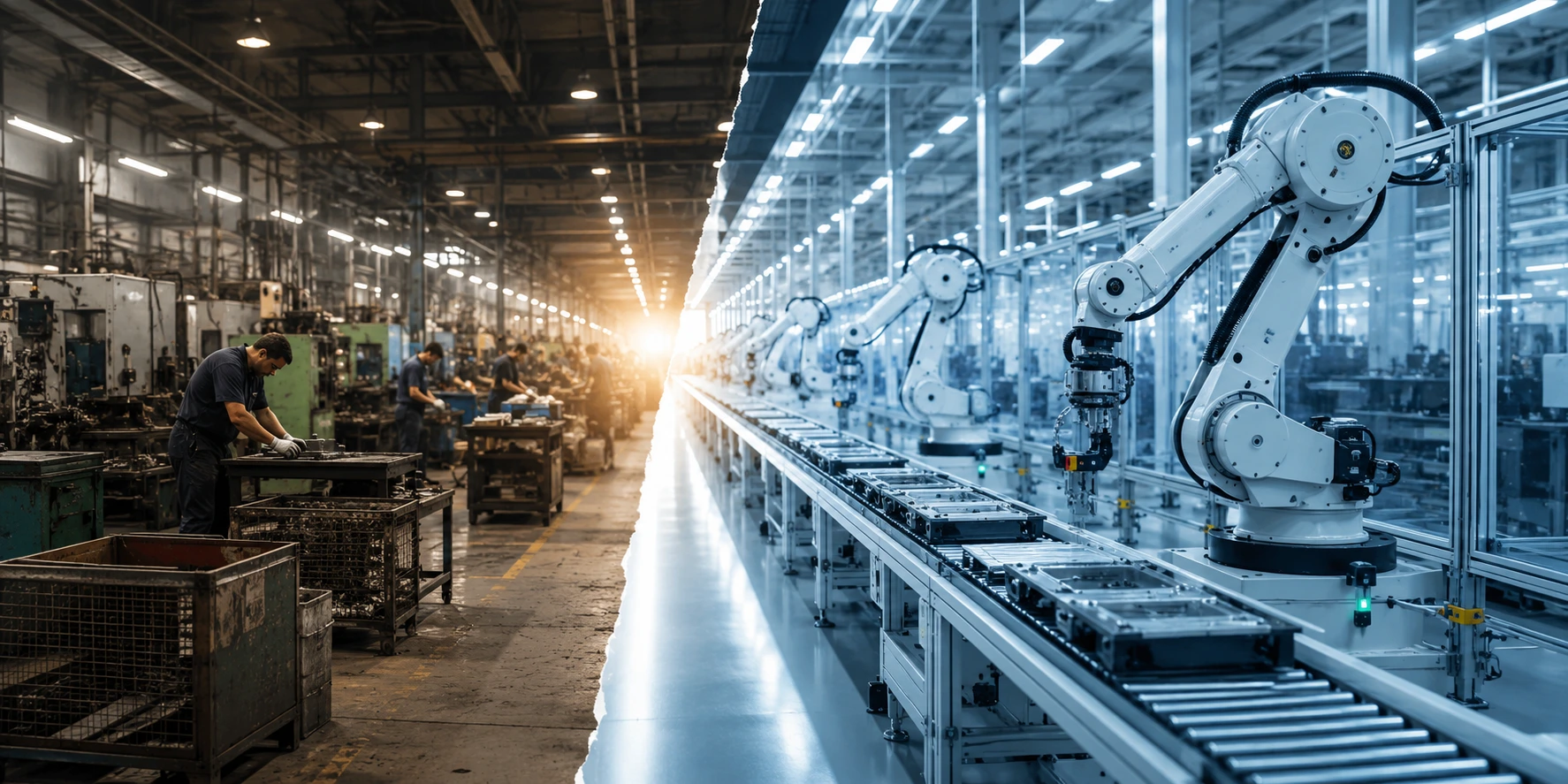
5 Signs Your Factory Needs Automation Immediately
In today’s highly competitive manufacturing landscape, factories are under constant pressure to produce more, maintain higher quality standards, reduce costs, and deliver products faster than ever before. Customers expect consistency, reliability, and shorter lead times. At the same time, manufacturers face challenges such as rising labor costs, equipment downtime, quality issues, and increasing market competition.
Many owners believe factory needs automation is only for large corporations with massive budgets. However, modern industrial automation has become accessible, scalable, and affordable for manufacturers of all sizes. The real question is not whether your factory can afford automation—it is whether your factory can afford to operate without it.
If your manufacturing facility is experiencing recurring operational challenges, these may be warning signs that automation is no longer optional. Below are five critical indicators that your factory needs automation immediately.
When Frequent Breakdowns Become a Normal Part of Production
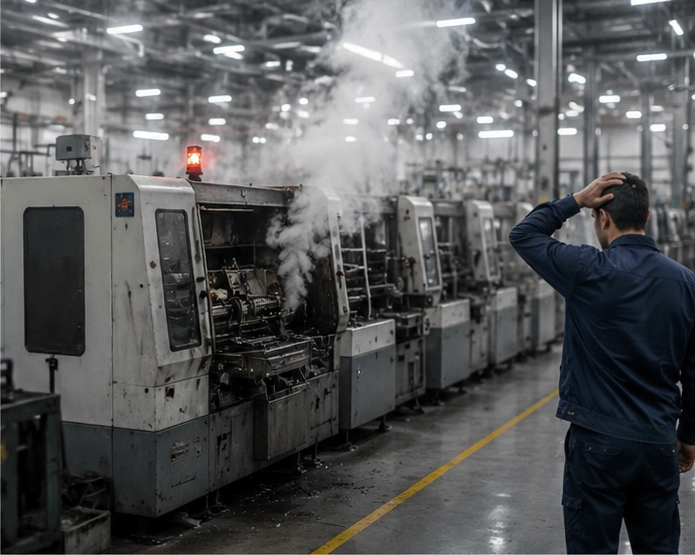
One of the biggest warning signs that a factory requires automation is frequent machine breakdowns that disrupt production schedules.Many manufacturing facilities still rely heavily on manual monitoring and reactive maintenance practices. Equipment is often repaired only after it fails. While this approach may seem economical in the short term, it often results in significant production losses, emergency repair expenses, missed deliveries, and dissatisfied customers.
Imagine a production line stopping unexpectedly for several hours. Workers remain idle, orders get delayed, and management scrambles to resolve the issue. These hidden costs accumulate rapidly. Automation systems can transform maintenance strategies by introducing predictive maintenance technologies. Sensors continuously monitor machine performance, vibration levels, temperature fluctuations, lubrication conditions, and operating parameters. Instead of waiting for equipment failure, automation systems identify abnormalities before they become major problems.
Benefits included:
- Reduced unplanned downtime
- Increased machine lifespan
- Lower maintenance costs
- Improved production reliability
- Higher overall equipment effectiveness (OEE)
Factories that continue to experience recurring breakdowns often discover that automation is the missing link between constant firefighting and stable production.
When Product Quality Changes from Shift to Shift
Consistency is the foundation of manufacturing excellence.Customers expect every product they receive to meet the same quality standards regardless of production date, shift timing, or operator experience.Unfortunately, factories that rely heavily on manual processes often struggle with product consistency. Different operators may follow slightly different procedures. Fatigue, distractions, and human error can lead to variations in dimensions, weights, assembly quality, packaging, or finishing.
Over time, inconsistent quality damages brand reputation and customer trust.Industrial automation removes much of this variability by standardizing production processes. Automated systems follow predefined instructions with remarkable precision. Whether producing 100 units or 100,000 units, automation maintains the same operational parameters throughout production.
Advanced automation solutions can:
- Control process variables with precision
- Maintain uniform production standards
- Monitor critical quality parameters
- Reduce operator-related variations
- Improve customer satisfaction
For manufacturers competing in today’s quality-driven markets, consistency is no longer a luxury. It is a necessity.
When High Rejection Rates Are Eating Into Your Profits
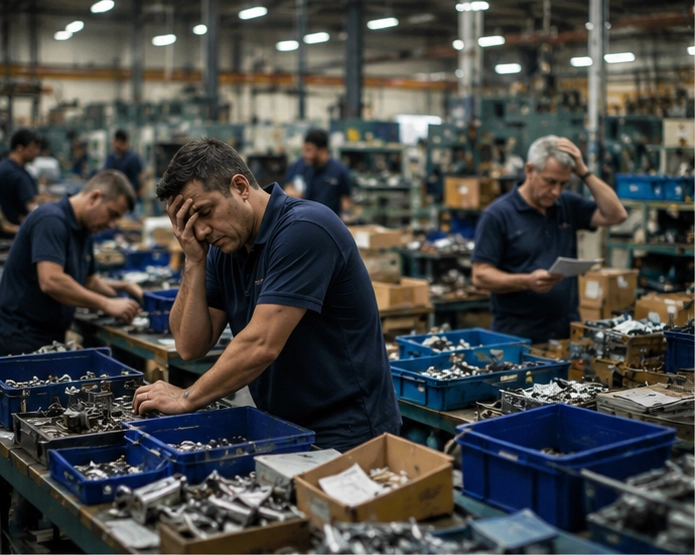
Every rejected product represents lost money. Raw materials, labor hours, machine time, electricity, packaging, transportation, and quality inspection resources are all consumed before a defective product is identified.
Many factories underestimate the true financial impact of rejection rates. Even a small percentage of rejected products can significantly reduce profitability over time.
Common causes of high rejection rates include:
- Human errors during production
- Inaccurate measurements
- Process variations
- Inconsistent machine settings
- Poor monitoring systems
- Lack of real-time quality control
Automation dramatically reduces these risks.
Modern automation systems integrate sensors, machine vision technology, inspection systems, and data analytics to monitor quality throughout the manufacturing process. Problems can be identified immediately rather than after an entire batch has been produced.
This proactive approach allows manufacturers to:
- Detect defects earlier
- Reduce scrap generation
- Improve first-pass yield
- Lower production costs
- Increase customer confidence
Factories experiencing consistently high rejection rates often find that automation pays for itself through waste reduction alone.
When Delivery Delays Are Becoming a Customer Complaint
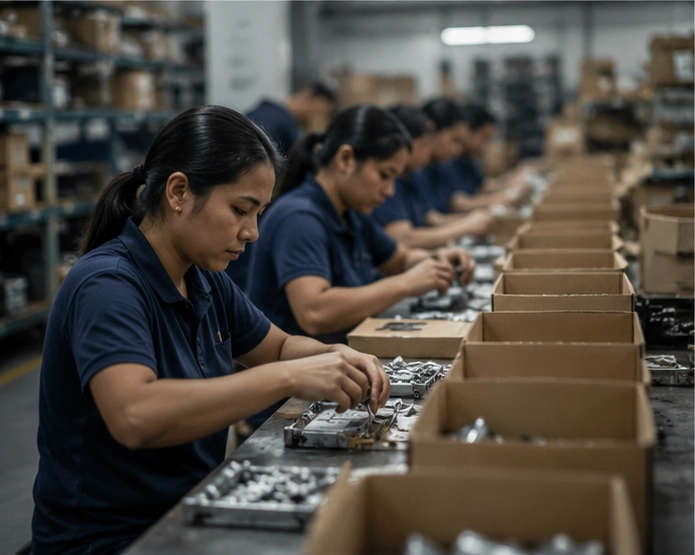
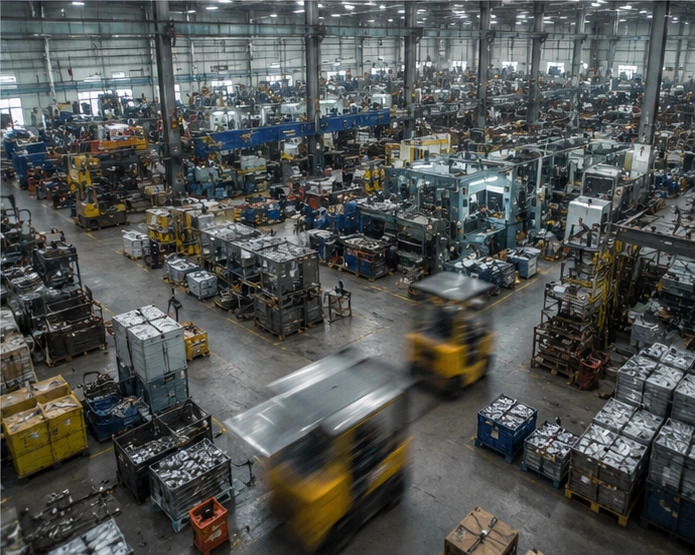
In manufacturing, delivery performance can determine whether customers stay loyal or move to competitors. Many factories struggle to meet deadlines because their production processes are heavily dependent on manual coordination. Delays in one department create bottlenecks throughout the entire production chain.
As customer demand grows, manual systems become increasingly difficult to manage. Production scheduling becomes more complex, communication gaps increase, and operational inefficiencies become more visible. Automation helps create a streamlined production environment where processes operate in synchronization.
Automated manufacturing systems provide:
- Real-time production tracking
- Faster production cycles
- Improved scheduling accuracy
- Better inventory management
- Reduced bottlenecks
- Enhanced workflow coordination
With automated production planning and monitoring systems, managers gain greater visibility into operations and can make faster decisions based on accurate data.
As a result, factories can consistently meet delivery commitments and strengthen customer relationships. In today’s marketplace, speed is a competitive advantage. Companies that deliver on time gain customer trust, repeat business, and stronger market positions.
When Your Factory Depends Too Much on Manual Labor
Labor remains one of the largest operational expenses for many manufacturers. While skilled workers are invaluable, excessive dependence on manual labor introduces challenges that can limit growth.
Manufacturers frequently encounter:
- Labor shortages
- High employee turnover
- Rising wage costs
- Training expenses
- Productivity variations
- Human errors
- Workplace safety concerns
As production demand increases, scaling operations through labor alone becomes increasingly difficult. Automation allows factories to achieve greater output without proportionally increasing workforce requirements.
Rather than replacing employees, automation enables workers to focus on higher-value activities such as:
- Process optimization
- Quality management
- Technical supervision
- Equipment maintenance
- Continuous improvement initiatives
Factories that embrace automation often discover that productivity increases significantly while operational costs become more predictable. The most successful manufacturers use automation to create a balanced workforce where technology and human expertise work together to achieve exceptional results.
The Hidden Cost of Delaying Automation
Many factory owners recognize these challenges but postpone automation investments due to budget concerns. However, the true cost of delaying automation often exceeds the investment itself.
Every day without automation can result in:
- Lost production opportunities
- Excessive downtime
- Increased waste
- Lower efficiency
- Higher labor costs
- Customer dissatisfaction
- Reduced competitiveness
Meanwhile, competitors continue improving productivity, reducing costs, and capturing market share through automation. The longer manufacturers wait, the wider the performance gap becomes.
How Hardai ARMND Engineering Solutions Helps Manufacturers Transform Operations
At Hardai ARMND Engineering Solutions, we understand that every manufacturing facility faces unique operational challenges. Our industrial automation solutions are designed to help factories increase productivity, improve quality, reduce downtime, and achieve sustainable growth.
We provide customized automation services including:
Industrial Automation Systems
Design and implementation of smart manufacturing solutions that streamline production and improve operational efficiency.
Process Optimization
Identification and elimination of production bottlenecks through intelligent automation strategies.
Productivity Enhancement Solutions
Systems designed to maximize equipment utilization and improve overall manufacturing performance.
Quality Improvement Technologies
Advanced monitoring and control solutions that help reduce defects and maintain consistent product quality.
Smart Manufacturing Integration
Industry 4.0 technologies that connect machines, processes, and data for real-time decision-making.
Maintenance and Reliability Solutions
Automation-driven monitoring systems that reduce unexpected breakdowns and improve equipment lifespan.
The Future Belongs to Automated Manufacturing
Manufacturing is entering a new era driven by smart factories, Industry 4.0 technologies, artificial intelligence, and advanced automation systems.Factories that adapt early gain significant advantages in productivity, quality, cost control, and customer satisfaction.
If your facility is experiencing frequent breakdowns, inconsistent quality, high rejection rates, delivery delays, or excessive labor dependency, these are not isolated problems—they are signals that your factory is ready for automation. The sooner you act, the sooner you can transform challenges into opportunities and position your business for sustainable growth.
Ready to Modernize Your Factory?
Partner with Hardai ARMND Engineering Solutions to discover how customized industrial automation solutions can help your business improve efficiency, reduce costs, and stay ahead of the competition.
The future of manufacturing is automated. The best time to begin is now.
Recent Posts
- Custom Automation Robotic Grippers: Improving Precision and Manufacturing Efficiency
- Custom Industrial Automation Solutions & Special Purpose Machines (SPM) for Modern Manufacturing
- Custom Machines: The Complete Guide to Custom Machine Design and Manufacturing
- Dry Film Lubricants vs. Wet Greases: When to Eliminate Liquid Lubrication Completely
- Types of Automation Systems in Manufacturing A Complete Guide for Indian Manufacturers
Products
-
 MolyKul MoS2 Gear Oil additive for cars and bike| Anti-friction MoS2 Solution - 100ml
₹598.73Original price was: ₹598.73.₹399.62Current price is: ₹399.62. Including 18% GST -
MolyKul Aero-Spec 500 (MKG AS500 NG2) – MoS2 Anti-Seize Aerospace grease – 500 Deg C
₹2,088.60 – ₹9,739.72Price range: ₹2,088.60 through ₹9,739.72 Including 18% GST
-
MolyKul MoS2 Grease for industrial application| Lithium + Anti-Seize MoS2 - 650 Deg C
₹1,539.90Original price was: ₹1,539.90.₹1,169.38Current price is: ₹1,169.38. Including 18% GST -
MolyKul MoS2 engine oil additive for cars and bikes| Anti-friction MoS2 Solution - 100ml
₹195.88 – ₹531.00Price range: ₹195.88 through ₹531.00 Including 18% GST
-
MolyKul MoS2 Grease for industrial application| Lithium + Anti-Seize MoS2 - 320 Deg C
₹684.40 – ₹6,608.00Price range: ₹684.40 through ₹6,608.00 Including 18% GST

Leave A Comment