MoS2 Nanotech for Space Bearings : High Perf
Introduction to MoS2 Nanotech for Space Bearings
In the demanding environment of space, traditional lubricants for space bearings, satellite bearings, and those used in electric motors, roller conveyors, and other machinery face challenges due to extreme temperatures, vacuum, and radiation. Stainless steel and steel balls within these bearings can degrade rapidly under such conditions. MoS2 (Molybdenum Disulfide) dry lubricant coatings offer a promising solution, providing exceptional lubrication properties in harsh conditions, even in the vacuum of space. This article explores the technology, advantages, and case studies of MoS2 Nanotech for Space Bearings for space machines and applications within the space and defense sectors, highlighting the advancements made in India by bearing manufacturing companies.
MoS2 Nanotech for Space Bearings Technology
MoS2 is a layered material with a hexagonal crystal structure. When applied as a coating on bearing surfaces, such as those found in electric motor bearings, roller conveyor bearings, and space bearings, it forms a low-friction interface that reduces wear and tear. This significantly improves the performance and lifespan of stainless steel and steel balls within these bearings. The coating is typically deposited using physical vapor deposition (PVD) or chemical vapor deposition (CVD) techniques, which are commonly employed by bearing manufacturing companies.
Advantages of MoS2 Nanotech for Space Bearings
MoS2 dry lubricant coatings offer several advantages for space applications, particularly for satellite bearings and those used in space and defense systems:
- Low friction: MoS2 has an extremely low coefficient of friction, reducing energy consumption and wear in electric motor bearings, roller conveyor bearings, and other machinery bearings used in space.
- High-temperature resistance: MoS2 coatings can withstand temperatures up to 450°C, making them suitable for the extreme thermal conditions encountered in space.
- Vacuum compatibility: MoS2 coatings are non-volatile and can operate in vacuum conditions without degrading, a crucial factor for space bearings operating in the near-vacuum environment of space.
- Radiation resistance: MoS2 coatings are resistant to radiation, ensuring long-term performance and reliability of space bearings in the harsh radiation environment of space.
- Cleanliness: Dry lubricants eliminate the need for liquid lubricants, reducing contamination risks and improving the overall cleanliness of space machines.
Case Studies
1. Indian Space Research Organization (ISRO)
ISRO has successfully deployed MoS2 dry lubricant-coated bearings for use in its space missions. These bearings have been incorporated into the Chandrayaan-2 lunar mission and the Mars Orbiter Mission.
2. Hindustan Aeronautics Limited (HAL)
HAL is using MoS2 dry lubricant-coated bearings for aircraft engines. These bearings have demonstrated improved performance and reduced maintenance costs.
Made in India
India has emerged as a leader in the development and manufacturing of MoS2 dry lubricant coated bearings for space applications, particularly for satellite bearings and those used in space and defense systems. Several leading bearing manufacturing companies in India, including Hardai ARMND Engineering Solutions, have established state-of-the-art facilities for producing these high-quality bearings. This indigenous capability not only strengthens the Indian space program but also positions India as a key player in the global market for advanced space bearings.
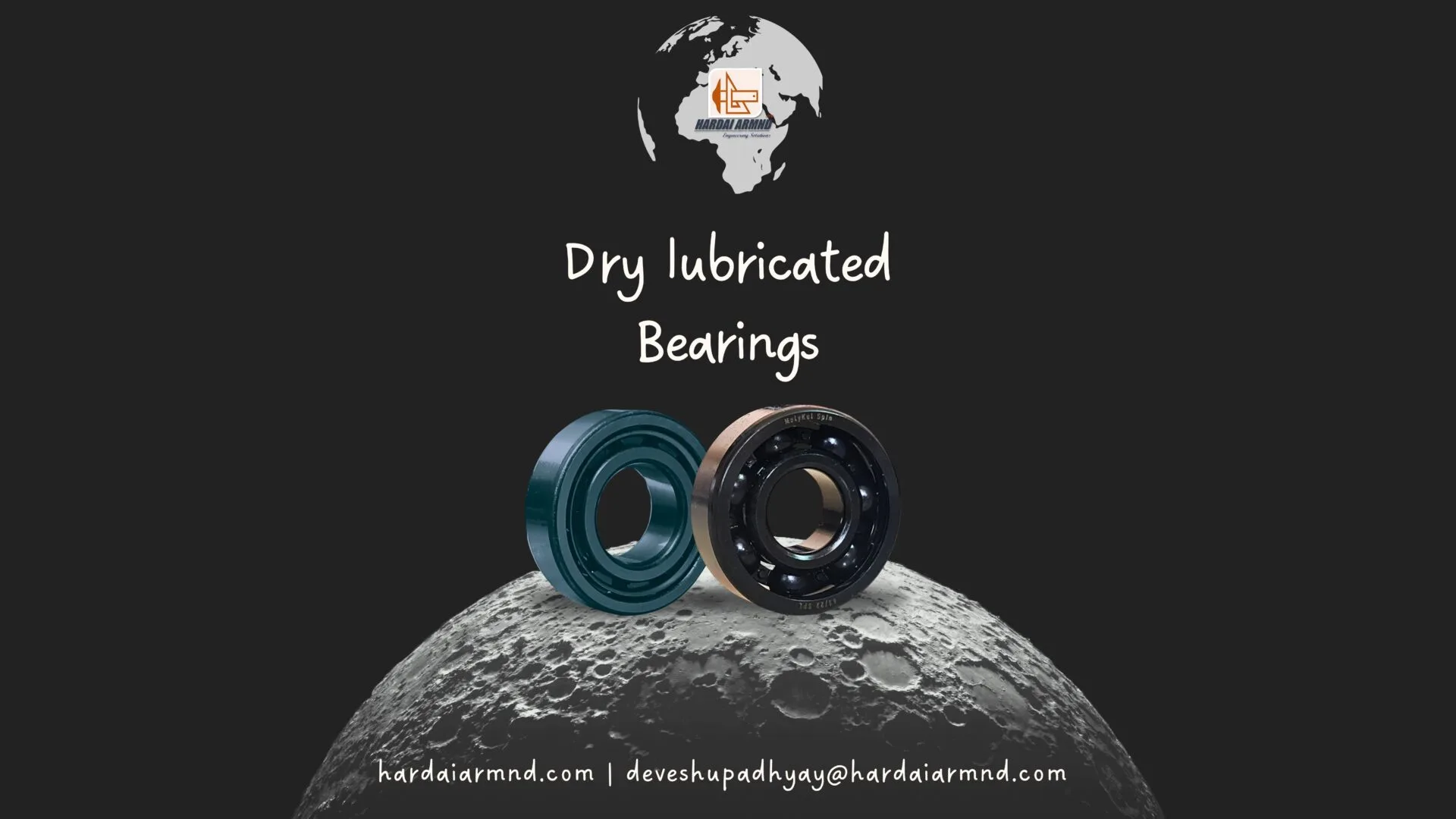
MolyKul Spin: Space Bearings
MolyKul Spin: Space Bearing represents a groundbreaking advancement in space technology. These bearings leverage the exceptional properties of MoS2 monolayer coatings, creating an ultra-low friction interface. Engineered for rigorous space environments, they excel in withstanding extreme temperatures, vacuum, and radiation. MolyKul Spin: Space Bearing minimizes wear and tear, enhancing the reliability and longevity of critical components in satellites and other spacecraft. By reducing energy consumption and improving efficiency, these space bearings pave the way for more sustainable and longer-lasting space missions. This innovation exemplifies India’s growing prowess in space technology and highlights the transformative potential of nanotechnology in revolutionizing space exploration.
FAQ’s
1. What is MolyKul Spin: Space Bearing?
- MolyKul Spin: Space Bearing is a revolutionary type of bearing designed specifically for space applications. It utilizes a unique coating of MoS2 monolayer, a single layer of molybdenum disulfide atoms, to achieve exceptional lubrication and performance in the demanding conditions of space.
2. What are the key advantages of MoS2 monolayer coating in space bearings?
- Ultra-low friction: MoS2 monolayer provides incredibly low friction, minimizing energy consumption and maximizing efficiency in space systems.
- Extreme temperature resistance: The coating can withstand the extreme temperature fluctuations encountered in space, ensuring consistent performance.
- Vacuum compatibility: MoS2 monolayer operates flawlessly in the vacuum of space without degradation.
- Radiation resistance: The coating is highly resistant to radiation, maintaining its lubricating properties even in harsh space environments.
- Cleanliness: Dry lubrication eliminates the need for liquid lubricants, reducing contamination risks and improving the overall cleanliness of spacecraft.
3. How does MoS2 monolayer improve the performance of space bearings?
- By significantly reducing friction, MoS2 monolayer enhances the efficiency and lifespan of space bearings. This translates to reduced energy consumption, increased reliability, and prolonged mission durations for satellites and other spacecraft.
4. What are the typical applications of MolyKul Spin: Space Bearing?
- MolyKul Spin: Space Bearing finds applications in a wide range of space systems, including:
- Satellite subsystems: Reaction wheels, momentum wheels, solar panel drives, and other critical components.
- Spacecraft propulsion systems: Thrusters, pumps, and other moving parts.
- Scientific instruments: Precision mechanisms in telescopes, spectrometers, and other scientific payloads.
5. How does MolyKul Spin: Space Bearing contribute to space exploration?
- By enabling more efficient and reliable operation of spacecraft components, MolyKul Spin: Space Bearing paves the way for longer and more ambitious space missions. It contributes to advancements in areas such as satellite communication, Earth observation, and deep space exploration.
6. What are the key challenges in developing MoS2 monolayer coated space bearings?
- Consistent and uniform coating: Ensuring consistent and uniform deposition of the MoS2 monolayer on the bearing surfaces is crucial for optimal performance.
- Maintaining coating integrity: The coating must maintain its integrity in the harsh space environment, including extreme temperatures and radiation.
- Scalable manufacturing: Developing scalable manufacturing processes for producing these bearings at a commercial level is essential for widespread adoption.
7. How does MolyKul Spin: Space Bearing contribute to India’s space program?
- MolyKul Spin: Space Bearing represents a significant advancement in Indian space technology. It showcases India’s expertise in nanotechnology and its ability to develop cutting-edge solutions for space applications.
8. What are the future prospects of MoS2 monolayer coated space bearings?
- Continued research and development will focus on further optimizing the coating process, exploring new applications, and improving the overall performance and reliability of these bearings.
9. Who are the key players in the development and manufacturing of MolyKul Spin: Space Bearing?
- Leading bearing manufacturing companies in India, along with research institutions and academic centers, are actively involved in the development and manufacturing of these advanced bearings.
10. How does MolyKul Spin: Space Bearing contribute to India’s position in the global space market?
- By developing and manufacturing world-class space bearings, India can strengthen its position in the global space market and become a key supplier of advanced space components to international space agencies and commercial space companies.
About Author

Leave A Comment