MoS2 vs. PAO : What You Need to Know

Introduction of MoS2 vs. PAO
Polyalphaolefin (PAO) lubricants, commonly known as synthetic oils, play a vital role across industries due to their ability to withstand extreme temperatures and provide excellent lubrication. However, challenges exist in several key areas. In boundary lubrication scenarios, where the lubricant film is thin or nonexistent, PAO lubricants may struggle to provide sufficient protection, leading to increased friction and wear. Contamination, whether from external sources or degradation of the lubricant itself, can compromise performance and cause equipment damage. PAO lubricants also have limitations in extreme pressure and temperature environments, where specialized formulations may be required. Frequent re-lubrication is often necessary to maintain optimal performance, contributing to higher maintenance costs and operational downtime. Additionally, issues such as oil slippage, complex lubrication system designs, and the need for costly equipment can further complicate usage and increase overall expenses. Next we will see the Difference MoS2 vs. PAO
MoS2 lubrication system
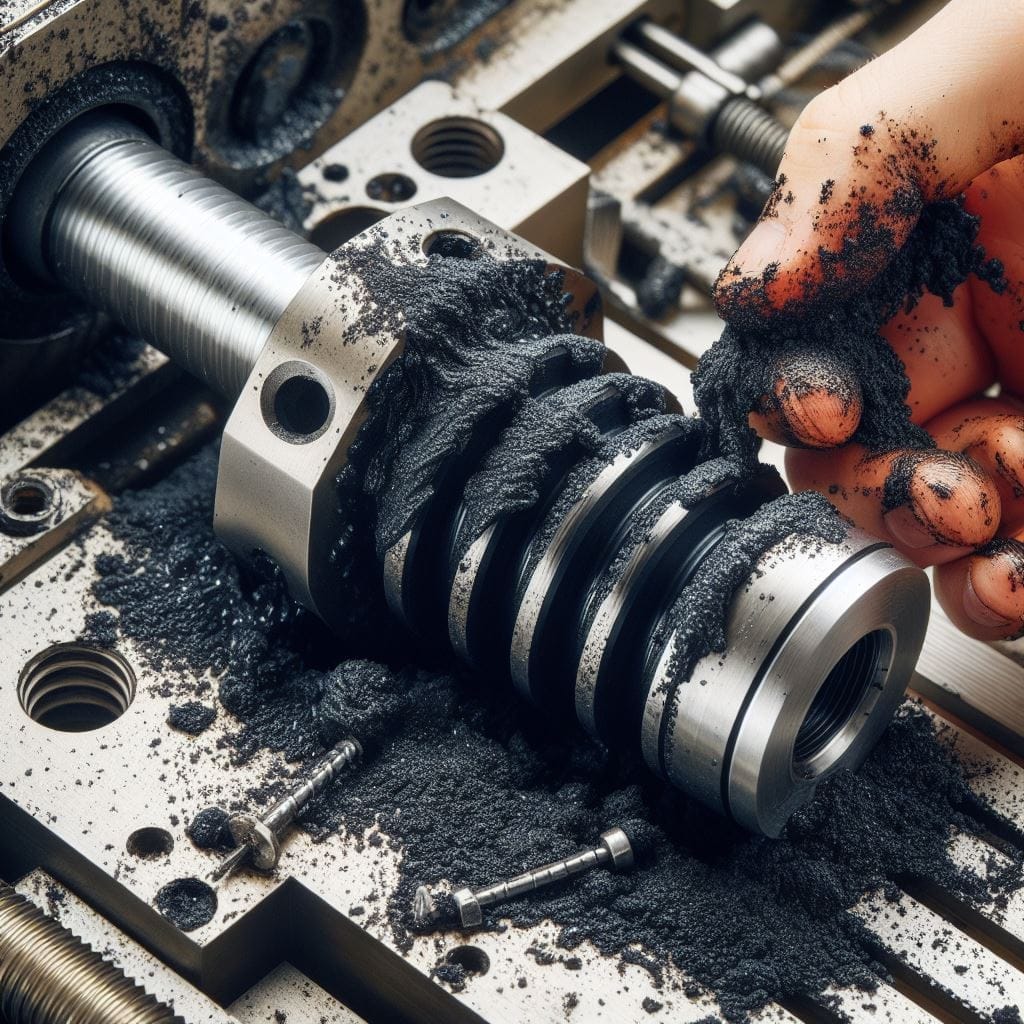
MoS2 lubrication exhibits remarkable versatility, serving as both a coating and a grease additive. Its application extends from small intermotions to micro-motions within machinery, providing effective lubrication. Whether reducing friction on surfaces or ensuring smooth operation in intricate mechanical systems, MoS2 lubrication proves indispensable across diverse industrial settings.

PAO lubrication system
PAO (Polyalphaolefin) lubricants, renowned for their low viscosity, excel in forming lubrication films, particularly suited for small intermotions within machinery. Their ability to create thin, consistent films effectively reduces friction and wear, ensuring smooth operation even in intricate mechanical systems.
MoS2 vs. PAO
| Aspect | MoS2 Lubrication | PAO Lubrication | Difference |
|---|---|---|---|
| Friction Reduction | High friction reduction due to lamellar structure and boundary lubrication properties | Moderate friction reduction | MoS2 lubrication offers significantly better friction reduction. |
| Wear Protection | Excellent wear protection with a durable protective layer formed on bearing surfaces | Good wear protection | MoS2 lubrication provides superior wear protection, leading to longer bearing lifespan. |
| Temperature Stability | High thermal stability, maintains lubricating properties under extreme temperatures | Moderate thermal stability | MoS2 lubrication offers better performance in high-temperature environments. |
| Initial Cost | Slightly higher initial cost due to manufacturing process and materials | Lower initial cost | MoS2 lubrication incurs higher initial investment. |
| Maintenance Costs | Potential for lower maintenance costs due to less frequent lubrication and replacement intervals | May incur higher maintenance costs over time | MoS2 lubrication could lead to overall lower maintenance costs. |
| Longevity | Extended service life due to superior wear protection and reduced wear on bearings | Service life dependent on maintenance frequency and wear | MoS2 lubrication results in longer-lasting bearings and reduced downtime. |
FAQ’s – MoS2 Vs. PAO
- What is MoS2 lubrication, and how does it differ from PAO lubrication?
- MoS2 lubrication involves the use of molybdenum disulfide (MoS2) as a solid lubricant, forming a protective layer between moving surfaces. In contrast, PAO lubrication uses polyalphaolefin, a synthetic hydrocarbon, as a base oil with various additives for lubrication. The key difference lies in their mechanisms of lubrication, where MoS2 provides solid boundary lubrication, while PAO offers fluid film lubrication.
- How does MoS2 reduce friction in bearings compared to PAO lubricants?
- MoS2 reduces friction by forming a solid boundary layer between the bearing surfaces, which minimizes direct metal-to-metal contact and frictional forces. PAO lubricants, on the other hand, rely on forming a fluid film between surfaces to reduce friction.
- What are the key advantages of MoS2 lubrication over PAO lubrication in terms of wear protection?
- MoS2 lubrication offers superior wear protection by forming a durable and low-shear-strength layer on bearing surfaces, effectively reducing wear. This protective layer is more robust compared to the film formed by PAO lubricants, resulting in longer-lasting bearings.
- Can MoS2 lubricants withstand extreme temperatures better than PAO lubricants?
- Yes, MoS2 lubricants generally exhibit higher thermal stability and can withstand extreme temperatures better than PAO lubricants. This makes them suitable for applications where high temperatures are encountered, such as automotive engines and factory machinery.
- Are there significant cost differences between MoS2 lubrication and PAO lubrication?
- MoS2 lubricants may have a slightly higher initial cost due to the manufacturing process and the cost of molybdenum disulfide. However, considering their superior performance and longer service life, they often provide cost savings in the long run compared to PAO lubricants.
- Do bearings lubricated with MoS2 require less maintenance compared to those lubricated with PAO?
- Yes, bearings lubricated with MoS2 typically require less maintenance due to the extended service life provided by the solid boundary layer formed by MoS2. This reduces the frequency of lubrication and replacement compared to bearings lubricated with PAO.
- How does the longevity of bearings differ when using MoS2 lubrication versus PAO lubrication?
- Bearings lubricated with MoS2 tend to have a longer service life due to superior wear protection and reduced friction, resulting in less wear and tear over time compared to bearings lubricated with PAO lubricants.
- What industries typically benefit the most from using MoS2 lubrication in bearings?
- Industries such as automotive, aerospace, manufacturing, and heavy machinery benefit the most from using MoS2 lubrication in bearings due to its excellent performance under high loads, extreme temperatures, and harsh operating conditions.
- Are there any environmental considerations when choosing between MoS2 and PAO lubricants?
- MoS2 lubricants are generally considered environmentally friendly as they do not contain harmful additives or volatile organic compounds (VOCs). However, proper disposal practices should be followed for used lubricants. PAO lubricants are also environmentally friendly, but some formulations may contain additives that require careful handling and disposal.
- Can existing lubrication systems be easily switched from PAO to MoS2 lubricants, and what are the considerations for doing so?
- Yes, existing lubrication systems can typically be switched from PAO to MoS2 lubricants with proper compatibility testing and adjustments to lubrication schedules. Considerations include compatibility with seals and materials, potential flushing requirements, and performance testing to ensure optimal performance with the new lubricant. Consulting with lubrication experts or manufacturers is advisable before making the switch.
About Author

Leave A Comment